Navigating the streets and alleys of Guangdong, electric two-wheelers have become the primary choice for residents’ daily commutes, food delivery services, and short-distance travel. The lithium battery installed on these vehicles is the “power heart” driving this wave of green mobility. As a national hub for the electric vehicle industry and lithium battery manufacturing, Guangdong is leveraging cutting-edge technologies to break through bottlenecks in lithium battery safety and performance. It is accelerating the phase-out of traditional lead-acid batteries for electric bikes, ushering in a new era of dendrite-free, long-range, fast-charging, and high-safety battery development.
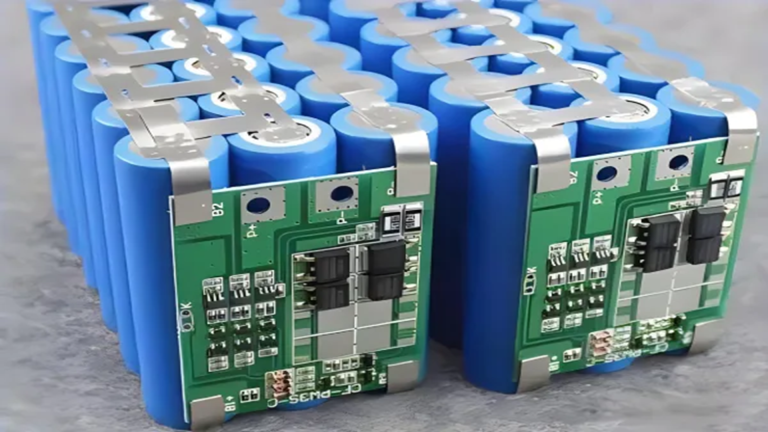
To understand lithium batteries, we must first examine their internal structure and how energy flows. A complete electric vehicle lithium battery consists of four core components—the cathode, anode, separator, and electrolyte—paired with a Battery Management System (BMS). The cathode, typically made of lithium iron phosphate or lithium manganate, acts as the original storage reservoir for lithium ions. The anode, mainly graphite, stores lithium ions during charging. The separator functions as a fine safety net, preventing direct contact and short circuits between the cathode and anode. The electrolyte serves as the liquid pathway for lithium ions to move.
Its energy operation mechanism is elegant: during charging, an external electric current drives lithium ions to detach from the cathode material, pass through the separator via the electrolyte, and embed orderly into the layered structure of the graphite anode, converting electrical energy into chemical energy. When discharging during riding, stored lithium ions leave the anode and return to the cathode along the same path, releasing a steady electric current to power the motor. This converts chemical energy back into mechanical energy, providing continuous power for the electric vehicle.
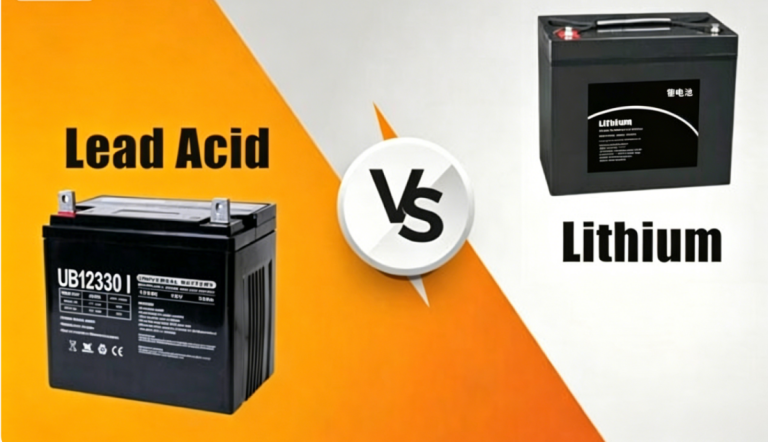
Compared with bulky lead-acid batteries, lithium batteries for electric vehicles offer distinct advantages: 60% lighter weight, smaller size, 2–4 hour fast charging, no memory effect, and a cycle life of 1,000 to 2,500 cycles. They perfectly suit high-frequency use by delivery riders and shared mobility scenarios. In 2024, lithium batteries accounted for 72.3% of newly sold electric vehicles in Guangdong, leading the nation in lithium battery adoption.
Amid the rapid popularization of lithium batteries, two core challenges hinder industry development and restrict safety and range. First, lithium dendrites—tiny, needle-like “hidden thorns”—pose fatal risks. Uneven deposition of lithium ions during charging forms needle-shaped dendrites on the anode. These can pierce the separator, causing short circuits, fires, or explosions, while continuously consuming electrolyte and active lithium, leading to rapid capacity loss and shortened lifespan. Guangdong’s hot and humid climate, combined with frequent fast charging and overcharging by delivery riders, further accelerates dendrite growth and raises safety hazards. Second, “double bottlenecks” exist at the electrode-electrolyte interface and in overall performance: high resistance to lithium ion transport slows charging and discharging speeds; limited energy density fails to meet long-range demands, and charging efficiency drops sharply in low temperatures, reducing adaptability across scenarios.
To address these pain points, Guangdong has brought together research institutions including the Shenzhen Institute of Advanced Technology (CAS) and South China University of Technology, alongside leading enterprises such as B&Z Power and Sunwoda, to achieve targeted breakthroughs through technological innovation. On the research front, interface catalysis and anode regulation guide uniform deposition of lithium metal, suppressing dendrite formation at the source. Optimized SEI film structures strengthen protective barriers. Advances in solid-state and semi-solid-state lithium batteries enable stable operation across an extreme temperature range of -70°C to 80°C, eliminating thermal runaway risks at the material level.
Industrial upgrades have delivered impressive results: many lithium battery products support 20-minute fast charging to 80% capacity, with a cycle life of up to 2,500 cycles. Self-developed BMS intelligent systems feature AI cloud early warnings, providing comprehensive protection against overcharging, over-discharging, short circuits, and high temperatures. New processes such as composite copper foil and dry electrode technology further enhance battery stability. A complete lithium battery industrial cluster has formed in Dongguan, Shenzhen, and Jiangmen. Local manufacturers rank among the top in China for shipment volume, and “Made in Guangdong” lithium batteries are exported worldwide, setting benchmarks in the lightweight power battery sector.
With technological iteration and implementation of new national standards, Guangdong’s electric vehicle lithium batteries will undergo full-scale upgrading. Dendrite-free lithium battery technology will gradually enter mass production, fundamentally resolving safety hazards. Energy density will keep improving, with driving ranges expected to exceed 200 kilometers, while fast charging, low-temperature adaptability, and other performance features will be continuously refined.
From daily commutes to urban logistics, from green transportation to industrial upgrading, Guangdong is galloping forward with lithium power enabled by technology. It continues to refine the “power heart” of electric vehicles, making lithium batteries safer, more powerful, and more durable. This supports the Guangdong-Hong Kong-Macao Greater Bay Area in building a green, low-carbon mobility ecosystem, ushering in a new era of lithium-powered lightweight transportation.